
Brakes & handling · Father Auto Journal
Car Suspension: Parts & Warning Signs
Suspension combines springs, dampers, linkages and joints to manage wheel movement and support tire contact. Persistent bouncing, new noise or uneven wear may prompt inspection, but symptoms alone do not identify the failed component.
Contact Us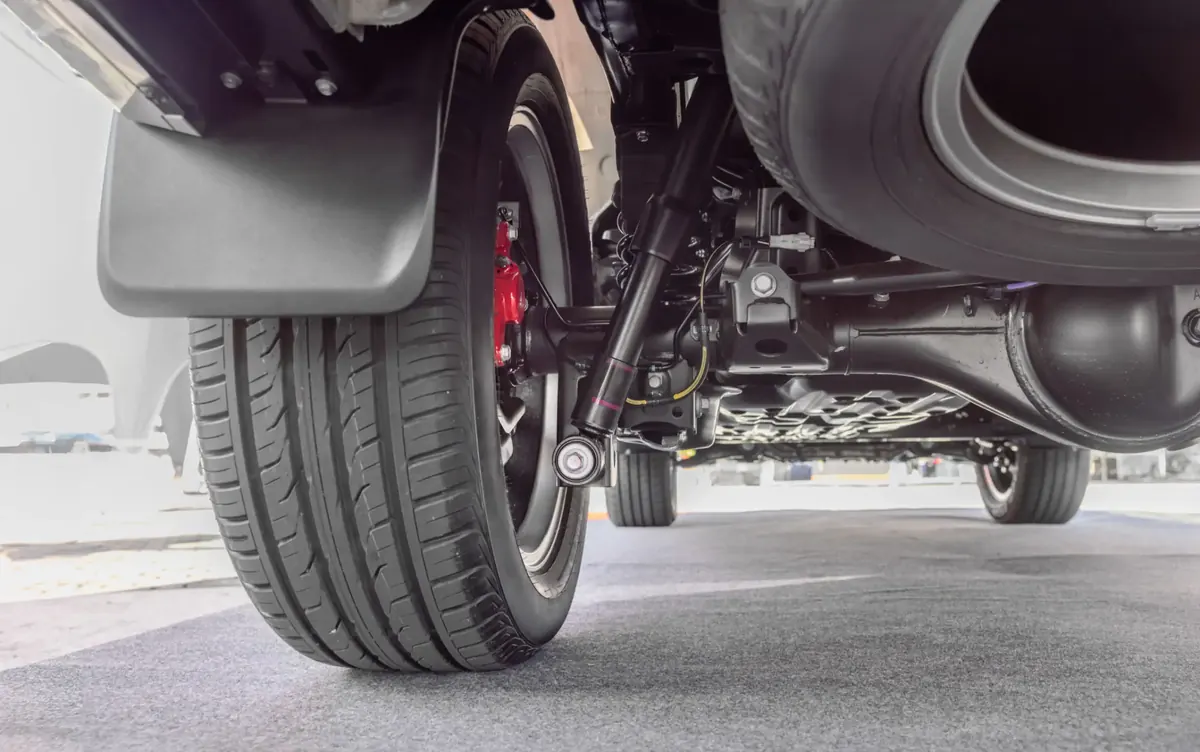
At a glance
Suspension combines springs, dampers, linkages and joints to manage wheel movement and support tire contact. Persistent bouncing, new noise or uneven wear may prompt inspection, but symptoms alone do not identify the failed component.
How suspension supports control and comfort
A vehicle’s suspension is the system that connects its wheels to the frame or body while allowing them to move in response to the road. Because road surfaces are rarely perfectly smooth, the wheels need to rise and fall without transferring every impact directly to the vehicle and its occupants. The suspension manages this movement and helps the vehicle remain composed as conditions change.
One central job is absorbing bumps and reducing vibration. Springs compress and extend as wheels encounter dips, ridges, and other irregularities, limiting how much movement reaches the cabin. Dampers, often called shock absorbers or struts, control the springs’ motion so the vehicle does not continue bouncing after an impact. Together, these parts contribute to passenger comfort and help keep the vehicle settled.
Suspension also helps maintain tire contact with the road. Tires can provide effective grip only when they remain pressed against the surface, so the system allows each wheel to respond to uneven ground. Consistent contact supports acceleration, steering, and braking, including when a driver needs to slow quickly or travel over a rough section of road. If a wheel loses contact, its ability to transmit forces is reduced.
A further role is supporting stability during acceleration, cornering, and travel across uneven surfaces. The suspension influences how the vehicle’s weight shifts and how its body moves, helping it remain predictable when direction or speed changes. Its design must balance comfort with controlled movement, since a setup that isolates occupants from bumps must still allow the tires and body to respond appropriately.
Suspension is not a single component but a coordinated arrangement of springs, dampers, linkages, joints, and supporting parts. The exact layout varies among vehicles, but these elements work together to locate and control the wheels as they move. Suspension is distinct from steering: steering changes the direction in which the wheels point, while suspension manages their movement relative to the vehicle. The two systems nevertheless work closely together, since stable wheel control supports accurate steering and dependable handling.
Springs, dampers, arms and stabilizer bars
A vehicle suspension is a coordinated set of components that supports the body, manages bumps, and guides the wheels. Springs carry the vehicle’s weight while allowing each wheel to move vertically over uneven surfaces. Coil springs are common in passenger vehicles, while leaf springs are often used in trucks because they can support substantial loads. Torsion bars provide springing through the twisting of a metal bar, and air springs use compressed air to support the vehicle, sometimes allowing ride height to be adjusted.
When a wheel rises over a bump, its spring compresses and stores energy. Without another component to control that energy, the spring would continue bouncing and the tire could lose consistent contact with the road. Shock absorbers, also called dampers, resist rapid movement and control the spring’s rebound. They help settle the vehicle after a disturbance, supporting predictable handling and ride comfort. Struts perform a similar damping role but also serve as structural parts of some suspension layouts.
Control arms connect the wheel assembly to the vehicle frame or body and define the path the wheel follows as it moves. Ball joints provide flexible pivot points, while bushings cushion connections and reduce vibration and noise. The steering knuckle holds the wheel hub and connects components such as the control arms and steering linkage. Together, these parts allow suspension articulation while helping preserve wheel alignment and controlled motion.
A sway bar, or stabilizer bar, links the suspension on opposite sides of an axle. During a turn, it resists the difference in movement between the two sides, limiting body roll and helping the vehicle remain composed. The precise arrangement varies by vehicle, and some designs integrate several functions into a strut. Across these layouts, the components must work together: springs absorb energy from the road, dampers manage oscillation and rebound, and linkages guide wheel movement. Their combined action helps keep tires planted while balancing stability, comfort, and control.
Common suspension layouts
Suspension layouts differ in how they connect and control a vehicle’s wheels. In a dependent design, the wheels on the same axle are linked, so movement at one side can affect the other. A solid axle is a familiar example: a rigid beam connects the wheels, making the arrangement relatively strong and straightforward to maintain. Its durability and ability to carry substantial loads suit some trucks and off-road vehicles, where robustness and ground clearance may matter more than isolating every wheel movement. The trade-off is that a bump affecting one wheel can influence the opposite side, which may reduce comfort or limit control on uneven surfaces.
Independent suspension allows each wheel to move more separately, helping it follow the road without requiring the wheel on the other side to move in the same way. This can support a smoother ride and more precise handling, although results depend on the complete vehicle design. A MacPherson strut combines a spring and damper in a compact arrangement, making it common where space and cost are important. Double wishbone suspension uses two control arms to guide wheel movement and gives engineers greater control over wheel position, often benefiting handling, but it can require more parts and room.
Multilink systems use several links to manage wheel movement. Their geometry gives engineers flexibility to balance comfort, grip, packaging, and cost, though the added components can increase complexity. Air suspension is an adjustable alternative that uses air springs instead of conventional coil springs. Depending on the vehicle, it can raise or lower ride height, or alter ride character to suit changing conditions or preferences. This adaptability comes with more complex systems and potentially greater maintenance demands. No layout is best for every vehicle: the right choice reflects its purpose, expected loads, terrain, available space, cost targets, and the manufacturer’s engineering priorities. A design optimized for carrying heavy cargo may make different compromises from one intended for comfortable commuting or responsive cornering.
Wear, warning signs and professional inspection
Suspension components are exposed to repeated movement, changing road surfaces, moisture, and substantial forces, so wear develops gradually. Age and mileage can weaken springs, dampers, bushings, and joints, while potholes, curbs, and other impacts may damage parts suddenly. Corrosion can compromise metal components, and routinely carrying heavy loads may place additional strain on the system. Because deterioration is not always obvious, paying attention to changes in ride and handling can help identify a problem before it affects vehicle control.
Common warning signs include continued bouncing after the vehicle passes over a bump, excessive body roll in turns, or the front end dipping sharply during braking. Clunks, squeaks, or other unusual noises may point to worn or loose components. Uneven tire wear, vibration, a vehicle that appears to sit unevenly, and changes in steering response can also be associated with suspension trouble. These symptoms may have more than one cause, however, so appearance or sound alone cannot confirm a serious fault. If steering feels unpredictable or control seems compromised, reduce driving where practical and seek qualified service promptly.
Basic checks can support, but not replace, a professional assessment. Inspect tires for uneven tread wear or visible damage, and confirm that tire pressures match the vehicle manufacturer’s recommendations. Arrange an inspection when warning signs appear, after a significant impact, or as part of routine maintenance if the vehicle’s history or condition warrants it. Worn suspension parts should be replaced promptly because the system helps keep tires in contact with the road and supports stable handling. After relevant suspension repairs, alignment should generally be checked; it may also be appropriate when tire wear patterns or handling changes suggest the wheels are no longer correctly aligned. A technician can assess related parts and recommend repairs based on the vehicle’s condition, rather than relying on a visual impression alone.
YOUR NEXT STEP
Clear advice starts with your vehicle.
Tell us your vehicle, the symptoms or tire size, and the service you need. We’ll confirm the available assessment, fitment or quote scope before your visit to 50 Munham Gate, Scarborough.
Explore Suspension Repair in Scarborough or send your details to the shop.
Contact Us