
Brakes & handling · Father Auto Journal
Brake Pads: Wear & Replacement
Brake pads create friction against disc rotors and wear with use. Their material and replacement specification must suit the vehicle.
Contact Us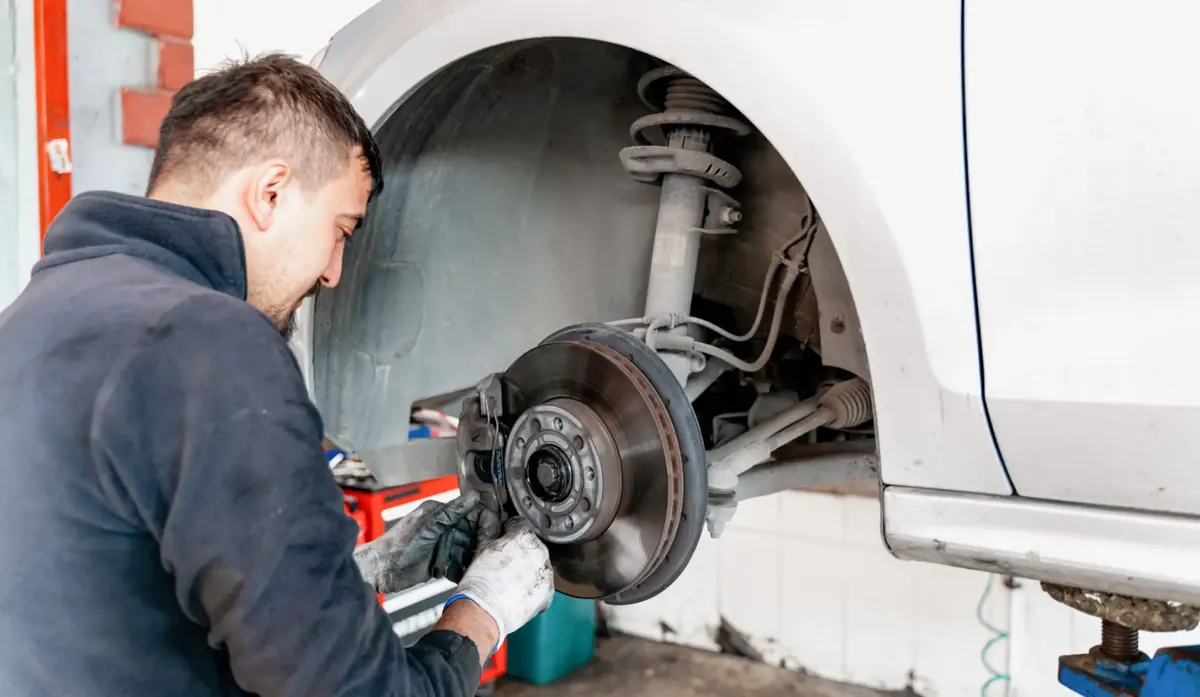
At a glance
Brake pads create friction against disc rotors and wear with use. Their material and replacement specification must suit the vehicle. Noise, vibration or changed pedal feel should prompt inspection beyond the visible pad surface before replacement work is quoted.
What brake pads do in a disc-brake system
Brake pads are the replaceable friction components that help a vehicle slow down and stop. They are used with disc brakes, which are fitted to the wheels of many modern cars. A disc brake has a metal rotor, also called a brake disc, that turns with the wheel. When the driver presses the brake pedal, the braking system transfers force through brake fluid. Hydraulic pressure moves pistons in the caliper, causing the pads to press against the rotor’s two sides.
This contact creates friction, which resists the rotor’s rotation and slows the wheel. Because the wheels are connected to the moving vehicle, reducing their rotation reduces the vehicle’s speed. Friction also changes the vehicle’s kinetic energy into heat, which is why brake components can become very hot during use. The system is designed to manage this heat, but repeated hard braking or poor component condition can affect performance. Releasing the pedal reduces hydraulic pressure, allowing the pads to move away from the rotor so the wheels can turn more freely.
A typical brake pad consists of friction material bonded to a rigid backing plate. The friction material is engineered to provide dependable grip while withstanding heat and wear; its composition varies by pad type. Some pads also include shims, thin layers that can reduce vibration and noise, and wear indicators that alert the driver when the friction material has worn down. Not every pad has the same features. Brake pads are specific to a vehicle and braking setup, so replacement parts must be compatible with the caliper and rotor.
Not all vehicles use disc brakes at every wheel. Some use drum brakes, in which curved brake shoes press outward against the inside of a rotating drum; these shoes perform a similar friction-based role but are not brake pads. Whether a vehicle has pads, shoes, or a combination, sound braking depends on suitable components in good condition. Worn, damaged, or mismatched pads can make braking less consistent, reduce stopping performance, or create noise and rotor damage. Regular inspection and correct replacement help maintain safe, predictable braking.
Choose pad material for the vehicle
Brake pads are commonly made from organic, semi-metallic, or ceramic friction materials. Each type can offer useful characteristics, but labels alone do not guarantee a particular result. Performance varies with the pad’s formulation, the vehicle’s braking system, and how and where the vehicle is driven.
Organic, or non-asbestos organic (NAO), pads typically use fibers and other materials bound together with resin. They are often quieter and may produce less abrasive wear on rotors, with a comfortable, predictable pedal feel in ordinary driving. They can, however, wear sooner than some alternatives, create noticeable dust, or be less suited to repeated high-heat braking. Their cost is often moderate, though prices vary.
Semi-metallic pads contain metal fibers or particles. They generally handle heat well and can provide strong braking and a direct feel, making them a common choice for heavier vehicles or demanding use. Potential trade-offs include more noise, darker or greater dust, and increased rotor wear. They may also feel less effective when cold, depending on the design, and their cost is usually moderate.
Ceramic pads are designed to deliver quiet operation and fine, light-colored dust, and many offer long service life in everyday conditions. Their braking feel can be smooth, and they often resist routine temperature changes well. Some formulations cost more, and ceramics are not automatically the right option for heavy loads, frequent towing, or sustained high temperatures. Other pad types may better match those demands.
Choose pads by checking the vehicle maker’s specifications, rather than assuming that the most expensive or longest-lasting option is best. Consider vehicle weight, typical routes, traffic, climate, towing, and any performance requirements. A pad that suits one car or driving pattern may not suit another, even if both use the same material category. A qualified technician can confirm compatibility and explain trade-offs for the specific vehicle.
Whatever material is selected, it must be matched to the braking system and rotor requirements. When replacement is needed, pads should be changed on both sides of the same axle to maintain balanced braking; replacing only one side can cause uneven response and handling concerns.
Noise, pedal changes and pad-wear clues
Brake pads often provide audible or physical clues as their friction material wears down. A high-pitched squeal when braking can come from a built-in wear indicator designed to alert the driver that the pads need inspection or replacement. However, squealing may also result from dust, moisture, glazing, or other brake-system conditions, so the sound alone does not confirm the cause.
A harsh grinding or scraping noise is more concerning. It can indicate that the friction material has worn away and the pad’s metal backing plate is contacting the rotor. Continued contact may damage the rotor and reduce braking performance, potentially increasing repair costs. Grinding should prompt a prompt professional inspection rather than being treated as an ordinary wear-indicator sound.
Other warning signs include vibration or pulsing through the brake pedal or steering wheel, a pedal that feels unusually soft or firm, and a vehicle that takes longer to stop. These symptoms can point to worn pads, but they may also involve rotors, calipers, brake fluid, tires, or other components. A brake warning light should also be taken seriously; its meaning varies by vehicle, and it may indicate a broader brake-system concern.
Where it is safe and practical, a visual check through the wheel may reveal that little friction material remains on the pads. Many manufacturers specify a minimum thickness, but an accurate assessment may require removing a wheel and checking both inner and outer pads. Because wear rates depend on driving style, stop-and-go traffic, hills, vehicle load, and pad material, mileage alone cannot determine when replacement is due. Follow the vehicle’s maintenance guidance and arrange an inspection when warning signs appear. If braking is severely impaired, the pedal sinks, or the vehicle cannot stop reliably, do not continue driving; arrange safe roadside assistance instead.
Inspection and replacement require the full brake context
A thorough brake inspection looks beyond the visible pad surface. A technician measures pad thickness and checks for uneven wear, cracks, glazing, contamination, or other damage. Pads may appear serviceable on one side while wearing faster on the other, so both sides of the axle should be assessed. The technician also examines rotor surfaces for scoring, heat damage, corrosion, and thickness or runout concerns, comparing measurements with vehicle specifications. Calipers, slide pins, hoses, and mounting hardware are checked for sticking, leaks, or damage. The brake-fluid level and condition, warning lights, and any unusual noises, vibration, or pedal behavior can reveal wider system issues. Replacement is appropriate when pads are at or below the manufacturer’s limit, damaged, contaminated, or otherwise unable to perform reliably.
Brake-pad replacement generally begins by parking on a level surface, securing the vehicle, and lifting it with correctly rated equipment at approved lift points. After removing the wheel, the technician releases or removes the caliper as required by the vehicle design and supports it so the brake hose is not strained. Old pads and worn or corroded hardware are removed, and the caliper and mounting surfaces are inspected. Rotors are measured and evaluated; they may be resurfaced where permitted or replaced if they fall outside specifications or are damaged. New pads and suitable hardware are installed, the caliper is reassembled, and the wheel is refitted and tightened to the specified torque. The brake pedal is then operated to restore pad contact before a careful functional test.
Brake work involves heavy components, stored pressure, and safety-critical parts. Correct tools, protective practices, and model-specific service instructions are essential; owners without appropriate experience should have a qualified mechanic perform the work. After installation, new pads usually require a controlled bedding-in period so their friction material mates properly with the rotors. Follow the pad or vehicle manufacturer’s directions, which may specify a sequence of moderate stops and time for cooling. Avoid harsh braking during this period unless needed for safety. Over time, gentle braking when practical, attention to new sounds or changes in pedal feel, and regular inspections can help identify wear early. Have any warning light, fluid leak, pulling, or reduced braking checked promptly rather than waiting for routine service.
YOUR NEXT STEP
Clear advice starts with your vehicle.
Tell us your vehicle, the symptoms or tire size, and the service you need. We’ll confirm the available assessment, fitment or quote scope before your visit to 50 Munham Gate, Scarborough.
Explore Brake Pad and Rotor Replacement in Scarborough or send your details to the shop.
Contact Us