
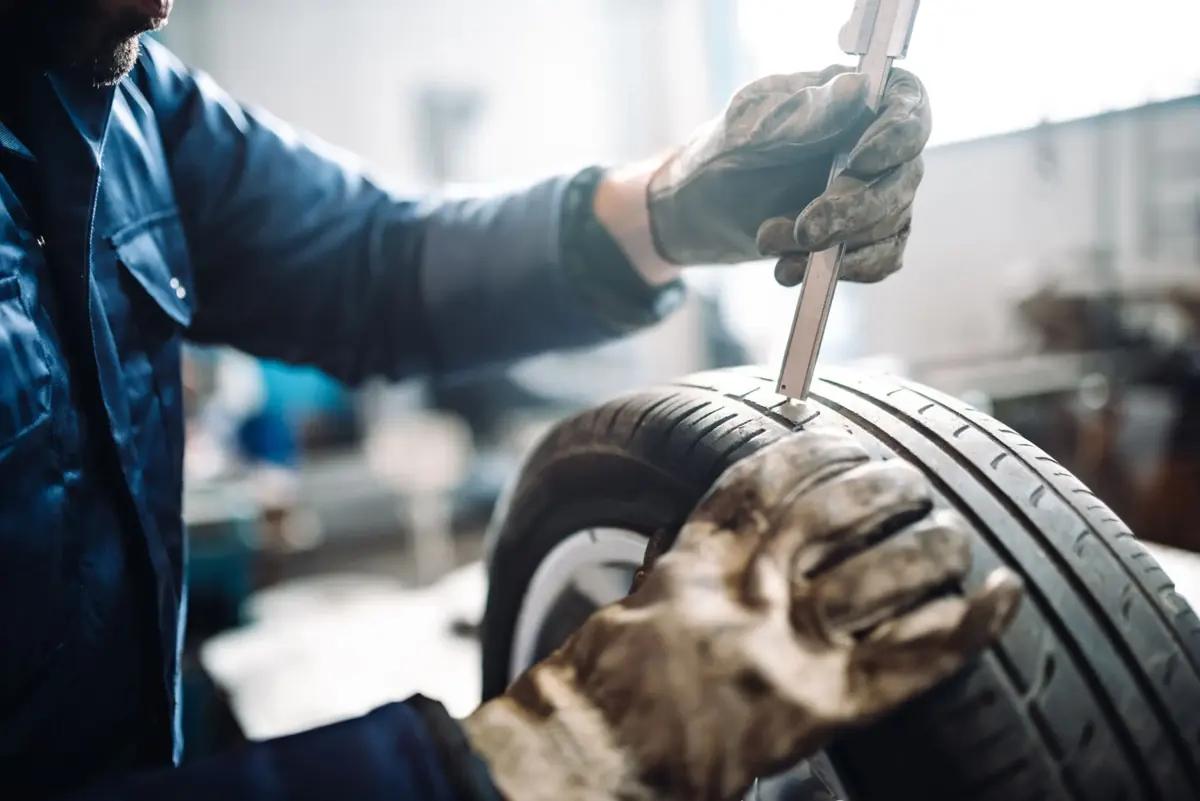
Find the cause of a flat or leaking tire
- How quickly the tire loses pressure and whether a nail or other damage is visible.
- Possible leak sources, including the tread, valve stem and tire-to-wheel sealing area.
- Tire condition and internal damage that may affect repairability.
- The repair method and quote, or a replacement option when the tire cannot be repaired.
Common reasons to request an assessment
- A tire that repeatedly needs air.
- A visible puncture or a pressure warning that returns.
- Damage after a road hazard, even if the tire still holds pressure.
Visible sidewall damage or a bulge needs prompt attention. Read the sidewall-damage and tire-bulge guide, then call about assessment before travelling.
What affects your quote?
Ask for an itemized quote based on your vehicle and the work needed.
- The source of the leak and whether the tire is repairable.
- Tire type and any manufacturer repair restrictions.
- Whether valve, TPMS, wheel work or a replacement tire is needed.
Not sure how to describe the problem? Read what to report about a slow tire leak or when a nail puncture may require replacement before calling. An inspection still determines the next step.
How to arrange your visit
Share your vehicle details
Tell us the year, make and model, along with the service or symptom. Use the quote checklist on this page to include the relevant details.
Review the quote
Discuss any assessment needed, the proposed work and what the total includes.
Confirm a service time
Arrange your visit directly with the shop. An online inquiry requests a response and does not reserve an appointment.
Common questions
Can every nail puncture be repaired?
No. The puncture's location and size, the tire's condition and the manufacturer's policy matter. Industry guidance limits typical passenger-tire puncture repairs to a suitable tread area. An inspection is needed before deciding.
Can damage in the sidewall be patched?
Typical puncture repairs are not appropriate for sidewall or shoulder damage. Have the tire assessed for replacement rather than relying on an external patch or plug.
Could the leak come from something other than a puncture?
Yes. A valve, wheel or sealing issue can also cause pressure loss. Describe the symptoms so the source can be investigated rather than assuming the tread is punctured.
Why does driving on a flat tire matter?
Driving while flat or severely underinflated can cause internal damage that changes whether the tire can be repaired. Tell the shop if this happened, even when the original puncture looks small.
Is a tire plug the same as a tire patch?
No. For a repairable passenger or light-truck tread puncture, USTMA guidance calls for tire removal and internal inspection, with the injury filled and the inner liner sealed. A plug alone is not an acceptable permanent repair under that guidance. Tire-maker restrictions and condition still determine repairability.
General technical references: USTMA — Tire Repair Basics. Vehicle requirements vary; discuss your specific vehicle with the shop.
Plan your service.
Contact our Scarborough shop about your vehicle, a quote and an available service time.